As an Amazon Associate I earn from qualifying purchases.
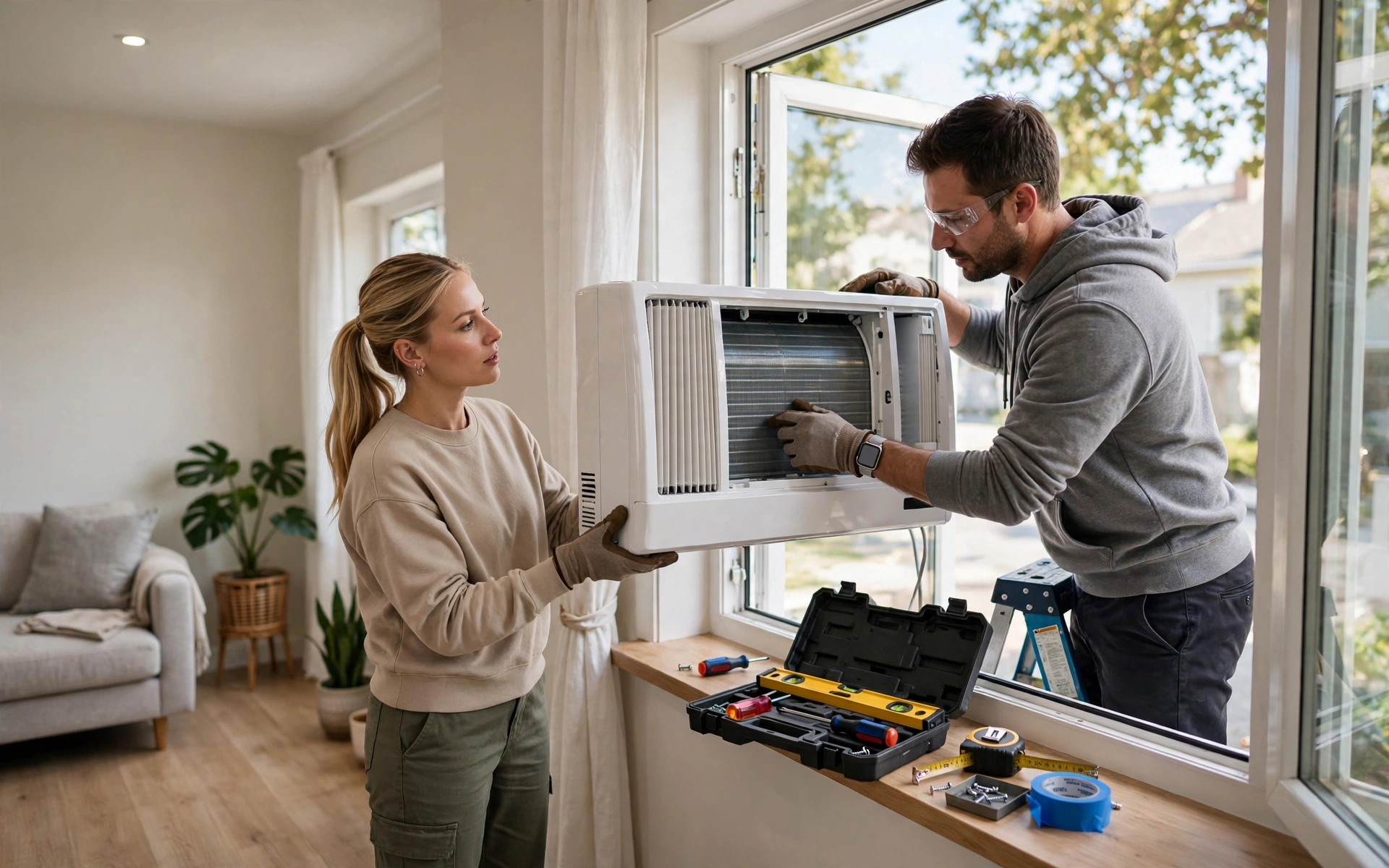
How to Install a Window AC Unit Safely: Step-by-Step Guide
How to Install a Window AC Unit Safely: Step-by-Step Guide Installing a window air conditioner safely involves preparing your window and electrical setup, us...
Review
How to Install a Window AC Unit Safely: Step-by-Step Guide
How to Install a Window AC Unit Safely: Step-by-Step Guide Installing a window air conditioner safely involves preparing your window and electrical setup, us...
Fast answer
Installing a window air conditioner safely requires proper preparation, the right tools, and careful handling to avoid damage or injury. This guide covers everything from choosing the correct unit and tools to detailed installation steps and sealing tips for maximum efficiency.
- A unified guide that merges product selection (with a definitive window vs. portable AC decision framework) and hyper-detailed, safety-centric installation instructions for various window types, capped with a comprehensive pre/post-installation checklist—addressing both the 'what to buy' and 'how to install' intents in one seamless, authoritative resource.
- Window air conditioners deliver superior cooling performance and energy efficiency compared to portable ACs. Source: https://www.hvacbase.org/portable-vs-window-ac
- Window ACs can cost 40-60% less to operate than portable ACs. Source: https://www.hvacbase.org/portable-vs-window-ac
- A 12,000 BTU portable AC typically cools like a 6,000-8,000 BTU window unit due to design limitations. Source: https://www.hvacbase.org/portable-vs-window-ac
- Portable ACs require sizing 50% larger than calculated room needs for adequate cooling. Source: https://www.hvacbase.org/portable-vs-window-ac
Our top picks
How to Install a Window AC Unit Safely: Step-by-Step Guide
Installing a window air conditioner safely involves preparing your window and electrical setup, using the right tools, lifting the unit with a helper, securing it properly, and sealing all gaps to prevent energy loss. Follow this guide to ensure a safe, efficient installation.
Why Choose a Window AC Over a Portable Unit?
Window air conditioners offer superior energy efficiency, faster cooling, and save floor space compared to portable units, making them the best choice for permanent cooling solutions.
Window AC units deliver better cooling performance and typically cost 40-60% less to operate than portable ACs. Portable units keep the compressor inside the room, causing more noise and heat, while window units exhaust heat outside, enhancing comfort and efficiency. However, window units can be heavy and require secure mounting, and some rental agreements or HOAs may restrict their installation.
| Feature | Window AC | Portable AC |
| Cooling Efficiency | High (direct exhaust outside) | Lower (compressor inside room) |
| Operating Cost | 40-60% less than portable units | Higher due to inefficiency |
| Noise Level | Quieter (compressor outside) | Louder (compressor inside) |
| Space Usage | No floor space used | Takes up floor space |
| Installation | Requires window and mounting | Easy, portable |
| Weight & Handling | Heavy, needs two people | Lighter, easier to move |
| Rental Restrictions | Often restricted by leases/HOAs | Usually allowed |
Choosing a window AC is ideal for homeowners and long-term renters who want efficient, quiet, and cost-effective cooling. Portable ACs suit renters with installation restrictions or those needing flexible cooling options.
"Window air conditioners offer the best balance of efficiency and cooling power for permanent installations."
What Tools and Pre-Checks Do You Need Before Installing a Window AC?
Gather these tools and materials before starting:
- Phillips and flathead screwdrivers
- Level
- Measuring tape
- Foam insulation strips or non-expanding foam tape (e.g., Mortite)
- Adhesive weatherstripping
- Mounting brackets or support arms (usually included with the unit)
- Safety gloves
- A helper for lifting and positioning
Pre-installation checks:
- Measure your window opening to confirm the AC unit fits properly.
- Inspect the window frame and sill for structural integrity and weight support.
- Ensure your electrical outlet is on a dedicated 15-20 amp circuit.
- Review lease agreements or HOA rules for window AC restrictions.
Never attempt to lift or install the unit alone; always have a helper to prevent injury or dropping the unit.
"Preparation and having the right tools and a helper are essential for a safe window AC installation."
How to Install a Window AC Safely: Step-by-Step Process
Follow these steps carefully with a helper to ensure safety and proper installation:
- Measure and prepare: Confirm the unit fits your window and clean the window sill.
- Lift safely: With your helper, lift the AC unit using your legs, never your back, and position it on the window sill.
- Position the unit: Slide the unit into the window, ensuring the bottom rests securely on the sill.
- Extend side panels: Pull out the accordion side panels to fill the window opening completely.
- Secure the unit: Attach mounting brackets or support arms to the window frame and unit to prevent movement.
- Tilt for drainage: Slightly tilt the unit outward (about 1/4 inch) to allow condensation to drain outside.
- Seal gaps: Use foam insulation and weatherstripping to seal all gaps around the unit.
- Lock the window sash: Lower the window sash behind the top flange of the AC unit to secure it.
- Test the unit: Plug into a dedicated circuit and test cooling and drainage.
Modern units like the Midea 10,000 BTU U-Shaped Smart Inverter AC have unique mounting designs that may simplify installation but still require secure support.
"Always lift with your legs and secure the unit before releasing its weight to avoid accidents."
How to Install a Window AC in Different Window Types
Installation methods vary by window type. Use the appropriate mounting solutions for your window:
Double-Hung Windows
Standard for most window ACs; follow the main installation steps above.
Casement Windows
These windows open outward with a crank. Use a slide-out chassis kit or a universal support bracket designed for casement windows to mount the AC unit securely.
Sliding Windows
Install a vertical support bar below the unit and use side panels designed for sliding windows. Ensure the unit is firmly supported and sealed.
Awning Windows
Less common for window ACs; consider portable ACs or consult manufacturer guidelines for specialized mounting kits.
Product recommendation: For casement windows, consider universal support brackets like the Keystone Universal AC Support Bracket to safely hold the unit.
"Adapting window ACs to non-standard windows requires specific kits and careful mounting to ensure safety and efficiency."
How to Properly Seal and Insulate Your Window AC
Proper sealing prevents energy loss, drafts, pests, and water damage, improving efficiency by up to 20%.
Steps:
- Apply non-expanding foam tape (e.g., Mortite) around the edges where the unit meets the window frame.
- Use adhesive weatherstripping on the window sash to seal the gap when lowered behind the AC flange.
- Fill any gaps between the side panels and window frame with foam insulation strips.
- Check seals seasonally and replace weatherstripping as needed.
"Sealing your window AC properly can reduce energy waste and improve cooling comfort significantly."
What Are the Electrical Requirements and Safety Checks?
Plug your window AC into a dedicated 15-20 amp circuit. Never use an extension cord. Test the outlet with a circuit tester and ensure the plug fits snugly.
Electrical safety tips:
- Confirm your circuit breaker supports the AC’s amperage.
- Use a plug-in circuit tester to check outlet wiring and grounding.
- Avoid extension cords or power strips to prevent overheating.
- Ensure the outlet is close enough to avoid stretching the cord.
"Using a dedicated circuit and avoiding extension cords are critical for electrical safety."
How to Choose the Correct BTU Size for Your Room
Calculate your room's square footage and multiply by 20 BTU for average climates. Adjust for high ceilings, sun exposure, or kitchens.
Example:
| Room Size (sq ft) | Recommended BTU |
| Up to 150 | 5,000 |
| 150-250 | 6,000 |
| 250-350 | 8,000 |
| 350-450 | 10,000 |
| 450-550 | 12,000 |
Upsize by 10-20% for rooms with high ceilings or lots of sun exposure. Kitchens may require an additional 4,000 BTU.
Note: Portable ACs require about 50% more BTU than window units to cool the same space effectively.
"Correct sizing ensures efficient cooling and energy savings."
Window AC vs. Portable AC: Which Should You Buy?
Choose a window AC for efficiency and cooling power in a permanent spot. Choose a portable AC only if you're a renter with installation bans or need to cool multiple rooms.
Decision factors:
- Efficiency: Window ACs cost 40-60% less to operate and cool faster.
- Installation: Window ACs require mounting; portable units are plug-and-play.
- Noise: Window ACs are quieter since compressors are outside.
- Space: Window ACs free up floor space.
- Rental Restrictions: Portable ACs are usually allowed where window units are banned.
Top products:
- Midea 10,000 BTU U-Shaped Smart Inverter Window AC: Energy efficient with smart home integration.
- Frigidaire 14,000 BTU Smart Window AC: Great for larger rooms with Wi-Fi control.
- Garvee 3-in-1 Portable AC 14,000 BTU: Flexible cooling for renters, less efficient.
- BLACK+DECKER BPACT10WT 10,000 BTU Portable AC: Budget-friendly portable option.
- ZAFRO 14,000 BTU Dual Hose Inverter Portable AC: High-efficiency portable unit.
"Window ACs provide the best value for permanent cooling; portable units offer flexibility for renters or temporary needs."
Conclusion: Your Window AC Installation Checklist
Use this checklist to ensure a safe and efficient installation:
Pre-Installation
- Measure window opening and unit dimensions.
- Check window frame and sill strength.
- Verify electrical outlet is dedicated 15-20 amp circuit.
- Review lease or HOA restrictions.
- Gather tools and materials.
- Arrange for a helper.
Installation
- Lift unit safely with helper.
- Position unit securely on sill.
- Extend and secure side panels.
- Attach mounting brackets/support arms.
- Tilt unit slightly outward for drainage.
- Seal all gaps with foam and weatherstripping.
- Lock window sash behind unit flange.
Post-Installation
- Test unit operation and drainage.
- Check seals and weatherstripping.
- Clean filter monthly during use.
- Monitor electrical circuit for issues.
Bookmark this guide for reference and maintenance tips to keep your window AC running safely and efficiently year-round.
Recommended Resources
Can I install a window AC unit by myself?
What if my window isn't a standard size?
How do I prevent the AC unit from falling out of the window?
Do I need a special outlet for my window AC?
How often should I clean my window AC filter?
What are the rules for installing a window AC in a rental property?
Recommended Resources

Lead researcher and home comfort specialist at House By Saay. Specializes in ergonomic design, sleep technology, and consumer product durability analysis.
Sources
- https://www.thisoldhouse.com/heating-cooling/best-portable-air-conditioner
- https://www.hvacbase.org/portable-vs-window-ac
- https://www.goodhousekeeping.com/what-to-buy/a71353906/portable-vs-window-ac/
- https://www.rtings.com/air-conditioner/reviews/best/portable
- https://www.thisoldhouse.com/heating-cooling/best-portable-air-conditioner
- https://www.hvacbase.org/portable-vs-window-ac
- https://www.goodhousekeeping.com/what-to-buy/a71353906/portable-vs-window-ac/
- https://www.rtings.com/air-conditioner/reviews/best/portable
Comments
Join the conversation
Leave a simple comment about How to Install a Window AC Unit Safely: Step-by-Step Guide.
No comments yet. Be the first to comment.