As an Amazon Associate I earn from qualifying purchases.
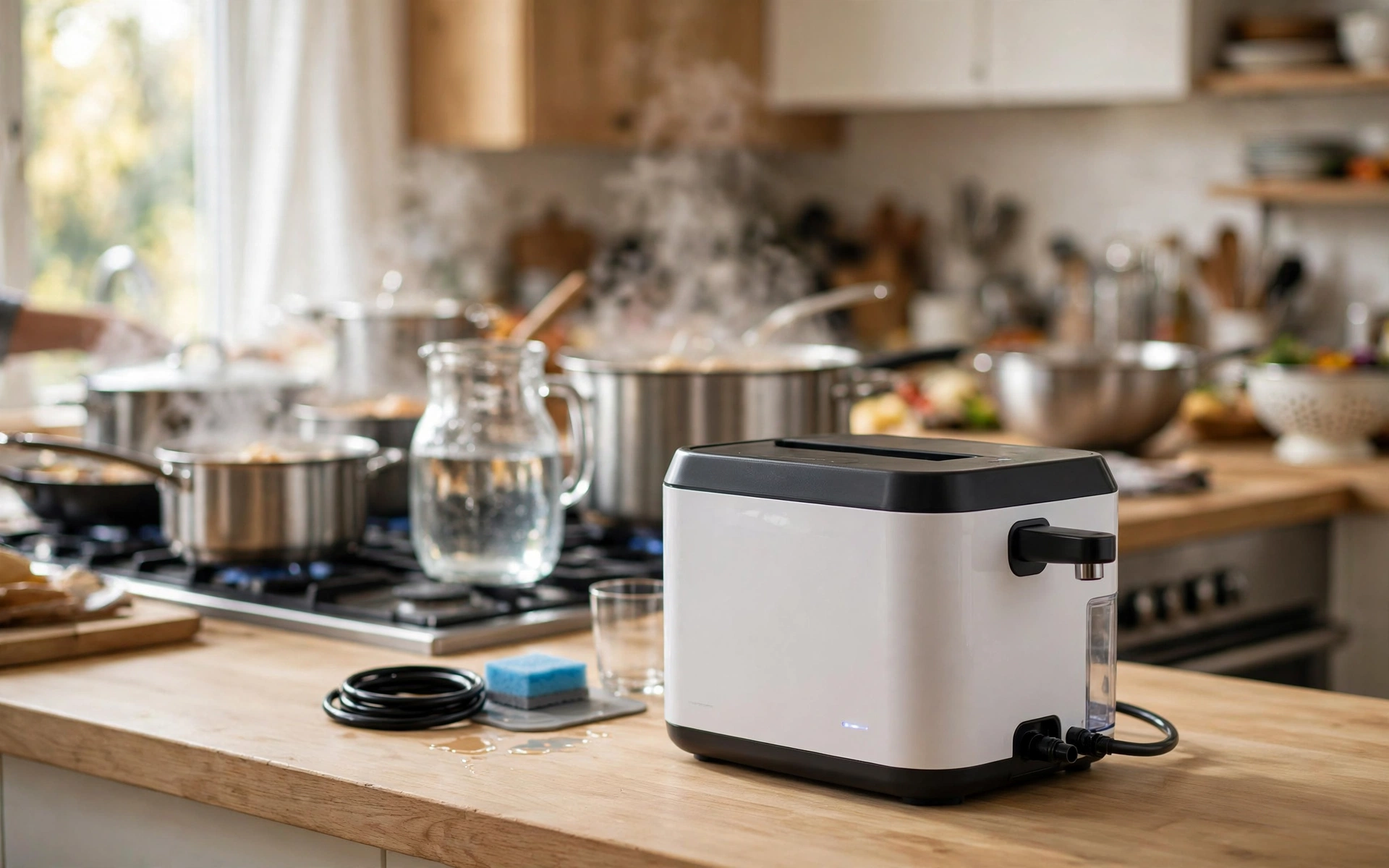
5 Mistakes When Buying a Countertop RO System: A Verification Guide
5 Mistakes When Buying a Countertop RO System Countertop reverse osmosis systems promise restaurant-quality water without under-sink plumbing, yet many units...
Review
5 Mistakes When Buying a Countertop RO System: A Verification Guide
5 Mistakes When Buying a Countertop RO System Countertop reverse osmosis systems promise restaurant-quality water without under-sink plumbing, yet many units...
Fast answer
Buying a countertop reverse osmosis system is often marketed as a simple plug and play upgrade for clean drinking water, but many buyers fall into costly traps that compromise performance and long term value. The most common errors involve trusting vague marketing claims over verified independent lab data, ignoring ine
- A decision framework that prioritizes independent lab verification and official certification checks over marketing claims, including a specific checklist for verifying NSF/IAPMO status and a comparison of real-world efficiency ratios (4:1 vs 2:1 vs 3:1+).
- AquaTru Carafe reduced 100% of trace contaminants and is the only countertop RO certified to NSF 42, 53, 58, 401 for all 83 claimed contaminants. Source: https://waterfilterguru.com/best-countertop-reverse-osmosis-system/
- AquaTru Carafe had the best measured efficiency at a 4:1 pure-to-waste ratio. Source: https://waterfilterguru.com/best-countertop-reverse-osmosis-system/
- Water Filter Guru independently verified every certification claim against IAPMO, NSF, and WQA databases because several manufacturer claims didn't hold up. Source: https://waterfilterguru.com/best-countertop-reverse-osmosis-system/
- Waterdrop G3P600 is NSF 58 certified, with SGS third-party testing supporting reduction of PFAS, fluoride, and heavy metals. Source: https://cleanwateradviser.com/waterdrop-g3p600-review/
Our top picks
5 Mistakes When Buying a Countertop RO System
Countertop reverse osmosis systems promise restaurant-quality water without under-sink plumbing, yet many units fail to deliver on their promises once installed in a home kitchen. Buyers frequently overlook critical verification steps, leading to systems that waste excessive water, lack proven contaminant reduction, or incur unexpected maintenance costs. By understanding these five common pitfalls, you can select a premium unit that delivers safe, efficient, and reliable purified water.
Mistake 1: Trusting Marketing Labels Over Independent Verification
The single biggest error buyers make is trusting manufacturer marketing labels instead of verifying official certification databases and independent lab test results. Many brands claim their systems are "certified" to remove contaminants, but these claims often lack backing from recognized standards bodies like NSF International, IAPMO, or WQA. For example, Water Filter Guru independently verified certification claims against these official databases and found that several popular models did not hold up to scrutiny Source. Only the AquaTru Carafe has been certified to NSF standards 42, 53, 58, and 401 for all 83 claimed contaminants, setting a high benchmark for transparency Source. Always check the official NSF database yourself rather than relying on product packaging.
"A long list of certified contaminants means nothing if the brand hasn't undergone independent third-party testing to prove actual reduction rates."
How to Verify Certifications Yourself
Do not rely on the product description alone. Follow these steps to verify any system's claims:
- Identify the Specific Model Number: Certification applies to specific configurations, not just brand names.
- Visit the Official Database: Go to the NSF Product Certification Database, IAPMO Certified Products Directory, or WQA Certified Products website.
- Search by Model: Enter the exact model number. If it does not appear, the claim is likely unsubstantiated.
- Check Standard Numbers: Ensure the listing includes NSF 58 (Reverse Osmosis) for contaminant reduction, not just NSF 42 (Aesthetics).
Red Flags to Watch For
- Vague language like "meets NSF standards" without citing specific standard numbers (e.g., 58).
- Claims of "certified" status with no link to a verifiable database entry.
- Lists of removed contaminants that exceed what NSF 58 typically covers without additional NSF 401 or proprietary testing data.
Mistake 2: Ignoring the Pure-to-Waste Ratio (Efficiency)
Ignoring the pure-to-waste ratio leads to significantly higher water bills and environmental impact, especially since traditional tank systems often run at a 3:1 ratio or worse. Modern efficient countertop models have improved this metric substantially; the AquaTru Carafe achieved the best measured efficiency at a 4:1 pure-to-waste ratio, while the Waterdrop G3P600 offers a 2:1 ratio with 600 GPD output SourceSource. Traditional systems store water in a 3-4 gallon pressurized tank and typically suffer from lower efficiency due to membrane pressure requirements Source. Choosing a unit with a poor ratio wastes gallons of potable water for every drop produced, making efficiency a key factor in long-term cost and sustainability.
Efficiency Comparison Table
| System Type | Example Model | Pure-to-Waste Ratio | Notes |
| Traditional Tank | Generic Under-Sink Units | 3:1 or worse | Stores water in 3-4 gal tank; lower efficiency. |
| High-Efficiency Tankless | Waterdrop G3P600 | 2:1 | 600 GPD output; modern membrane tech. |
| Premium Countertop | AquaTru Carafe | 4:1 | Best-in-class efficiency; reduces waste significantly. |
Mistake 3: Overlooking Long-Term Filter Costs & Maintenance
Overlooking filter replacement costs and maintenance complexity is a frequent oversight that turns an affordable upfront price into an expensive long-term commitment. Some systems require tools and significant effort to swap filters, while others, like the Waterdrop G3P600, allow twist-and-go replacements in seconds without tools Source. The G3P600 also features an LED smart faucet that displays real-time Total Dissolved Solids (TDS) and filter life, helping users stay on top of maintenance Source. Neglecting timely filter changes voids warranties and drastically reduces contaminant removal performance, so always calculate the annual cost of consumables before buying.
Estimated Annual Filter Costs
While prices vary by region and retailer, here are typical estimates based on current market data:
- Waterdrop G3P600: Approximately $100–$150 per year. Filters last 6–12 months depending on usage.
- AquaTru Carafe: Approximately $100–$120 per year. Pre-filters and post-filters need regular replacement.
- Bluevua ROPOT/RO100: Approximately $80–$120 per year. Check specific model manuals for filter lifespan.
Note: Always verify current pricing on manufacturer websites or authorized retailers like Amazon.
Mistake 4: Choosing Tankless Without Understanding Trade-offs
Choosing a tankless system without understanding its trade-offs can lead to disappointment regarding pump noise, lack of remineralization, and higher initial prices. Tankless designs like the Bluevua RO100ROPOT and Waterdrop G3P600 offer continuous flow and save counter space by eliminating bulky storage tanks, but they often come with operational downsides. Users of the G3P600 have reported noticeable pump noise during operation, and unlike some tank-based systems, these units may not include remineralization stages that improve taste Source. While the upfront cost is generally higher, the convenience of instant access and reduced footprint makes them viable for those who prioritize space and flow speed over silent operation.
Tankless vs. Tank-Based Trade-offs
- Upfront Cost: Tankless units (e.g., G3P600) often cost more initially than basic tank systems.
- Noise: Tankless pumps can be louder than gravity-fed or tank-based systems.
- Taste: Tank systems often include remineralization cartridges; many tankless units do not, resulting in flatter-tasting water.
- Space: Tankless saves significant counter/cabinet space.
Mistake 5: Assuming All Countertop Units Are Renters-Friendly
Assuming all countertop units are equally renter-friendly ignores specific constraints like lease restrictions, available counter space, and portability needs. Plug-and-play systems such as the Bluevua RO100ROPOT are designed specifically for renters, requiring no under-sink installation or permanent plumbing modifications Source. However, they still demand a dedicated electrical outlet and sufficient counter space for the unit and wastewater drainage. Before purchasing, verify that your lease allows for minor appliance additions and ensure you have a convenient spot to drain wastewater. Additionally, consider that while Bluevua avoids permanent changes, you must still weigh its specific filter costs and waste ratio against other options like AquaTru or Waterdrop to ensure it meets your long-term needs.
Renter Checklist
- Lease Review: Confirm allowance for small appliances and sink modifications.
- Counter Space: Measure dimensions for the unit and wastewater hose routing.
- Power Access: Ensure a nearby grounded outlet is available.
- Portability: Consider weight and ease of disassembly if you move frequently.
Independent Lab Testing: Real Performance Data
Marketing claims often diverge from reality. Water Filter Guru tested nine systems using accredited lab pre/post samples, measuring actual reduction of contaminants including fluoride, uranium, and nitrate Source. This independent verification revealed large differences in actual contaminant reduction among competitors. For instance, SGS testing on the Waterdrop G3P600 supports reduction of PFOA/PFOS, chromium, fluoride, arsenic, radium, iron, calcium, chloride, and radioactive substances Source. Meanwhile, AquaTru remains the only countertop RO in the guide certified for all 83 contaminants it claims to reduce Source. Buyers should prioritize units with published independent lab data over those relying solely on manufacturer statements.
Conclusion
Selecting the right countertop reverse osmosis system requires moving beyond marketing hype. By verifying certifications through official databases, comparing pure-to-waste efficiency ratios, calculating long-term filter costs, and understanding the trade-offs of tankless designs, you can avoid common pitfalls. Whether you choose the highly efficient AquaTru Carafe, the smart-enabled Waterdrop G3P600, or the renter-friendly Bluevua RO100ROPOT, ensuring independent verification of performance data will guarantee a safer, more sustainable investment in your home water quality.
Recommended Resources
Can a countertop RO remove fluoride and PFAS?
Do countertop RO systems waste a lot of water?
Is a countertop RO easy to install in an apartment?
How long do filters last and what do they cost?
What does NSF 42, 53, 58, and 401 mean?
Which countertop RO is best for renters?
Recommended Resources
About the author
House By Saay
Editorial contributor for House By Saay, focused on clear, practical, reader-first buying guidance.
Sources
Keep reading
Related articles
5 Mistakes When Buying a Whole House Water Filter
5 Mistakes When Buying a Whole House Water Filter Buying a whole house water filter looks straightforward until you install it and watch your shower pressure...
Best Alternatives to Bluevua RO100ROPOT for Renters
Best Alternatives to Bluevua RO100ROPOT for Renters Finding the right reverse osmosis (RO) system as a renter means balancing rigorous contaminant removal wi...
Does the Bluevua RO100ROPOT Remove Hard Water Taste?
Does the Bluevua RO100ROPOT Remove Hard Water Taste? Yes, the Bluevua RO100ROPOT effectively removes the distinct taste of hard water by filtering out dissol...
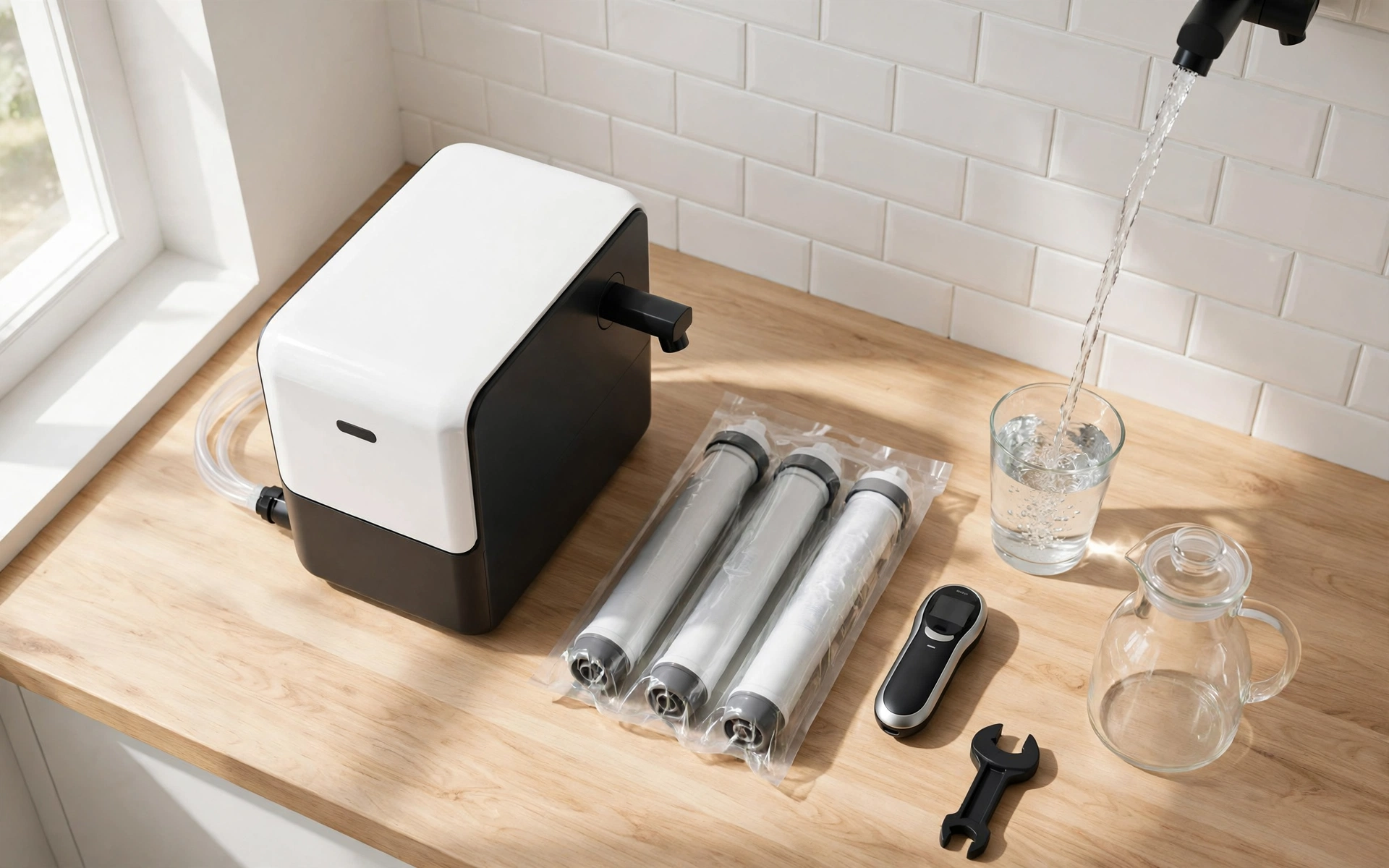
Essential Accessories for Your Bluevua RO100ROPOT: Filters, TDS Meters & Maintenance
Essential Accessories for Your Bluevua RO100ROPOT The Bluevua RO100ROPOT Countertop RO is a compact, tankless-style reverse osmosis system designed for rente...
Comments
Join the conversation
Leave a simple comment about 5 Mistakes When Buying a Countertop RO System: A Verification Guide.
No comments yet. Be the first to comment.