As an Amazon Associate I earn from qualifying purchases.
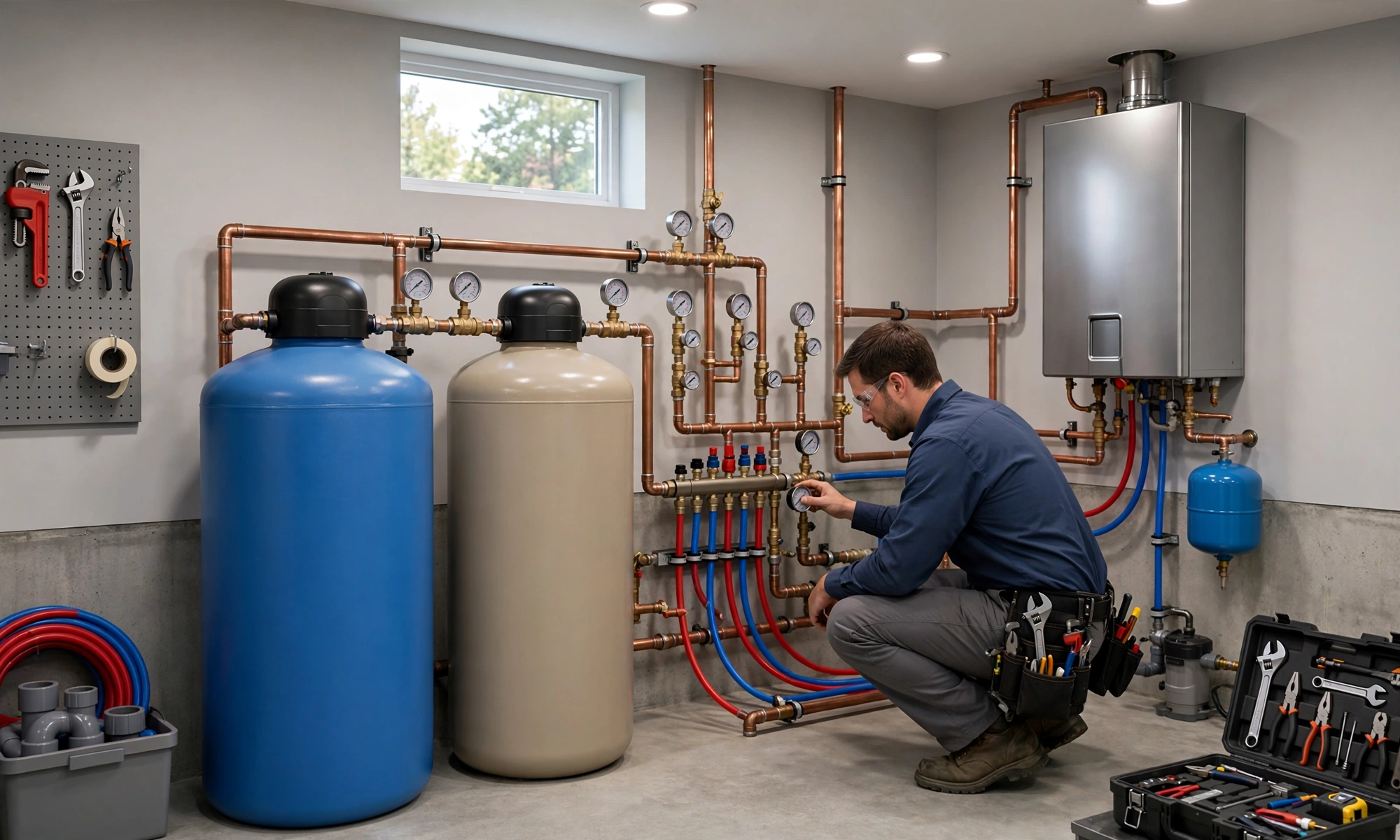
5 Costly Mistakes When Installing a Whole-House Water System
5 Costly Mistakes When Installing a Whole-House Water System Installing a whole-house water system without proper planning leads to expensive failures, prema...
Review
5 Costly Mistakes When Installing a Whole-House Water System
5 Costly Mistakes When Installing a Whole-House Water System Installing a whole-house water system without proper planning leads to expensive failures, prema...
Fast answer
Installing a whole house water system requires precise water testing, correct sizing, and professional installation to avoid costly failures. This guide reveals the top five mistakes homeowners make and how to prevent them for lasting, efficient water treatment.
- The 'Forensic Failure Analysis' angle and the accompanying 'Cost Chain' explanations for each mistake provide original educational value. The comprehensive, integrated Decision Tree/Flowchart that combines water test results, home size, and fuel type to output specific system recommendations is a tool competitors lack. The detailed coverage of electrical and plumbing installation mistakes for filters/softeners fills verified content gaps.
- Rinnai is a premium, contractor-grade tankless water heater option, while Rheem is a value play widely stocked at big-box stores. Source: https://plumbingsniper.com/rinnai-vs-rheem-tankless-water-heater-2026/
- Propane operating costs for tankless heaters run about 2x natural gas at current rates. Source: https://plumbingsniper.com/rinnai-vs-rheem-tankless-water-heater-2026/
- Rinnai tankless heaters are recommended for large households (4+ people, 3+ bathrooms) needing maximum flow rate (11.1 GPM). Source: https://plumbingsniper.com/rinnai-vs-rheem-tankless-water-heater-2026/
- Gas appliance installation requires a licensed plumber in most states; unpermitted installs void the warranty. Source: https://plumbingsniper.com/rinnai-vs-rheem-tankless-water-heater-2026/
Our top picks
5 Costly Mistakes When Installing a Whole-House Water System
Installing a whole-house water system without proper planning leads to expensive failures, premature equipment damage, and wasted money. This article exposes the five most costly mistakes homeowners make during installation and provides actionable steps to avoid them.
Why is skipping professional water testing before installation a costly mistake?
Skipping professional water testing results in choosing the wrong system, causing scale buildup, poor filtration, and early equipment failure.
Professional water testing accurately measures hardness in grains per gallon (gpg) and identifies contaminants. Many homeowners mistakenly rely on Total Dissolved Solids (TDS) or DIY kits that do not measure hardness properly, leading to undersized or inappropriate water softeners and filters. One grain per gallon equals about 17.1 mg/L of calcium carbonate. For example, failing to detect hard water above 4 gpg can cause scale buildup inside tankless water heaters, drastically reducing their lifespan and efficiency. This mistake triggers a chain reaction: wrong system → scale buildup → heater failure → costly repairs or replacement.
A professional test also reveals specific contaminants that dictate filter type selection, such as sediment, chlorine, or heavy metals, ensuring the filtration system matches your water quality needs.
"Accurate water testing is the foundation of a successful whole-house water system installation."
How does mis-sizing your system for GPM, BTU, or grain capacity affect performance and costs?
Mis-sizing leads to insufficient hot water, frequent regeneration cycles, or wasted energy, increasing long-term costs and reducing comfort.
Sizing a whole-house system requires calculating your home's peak demand. For tankless water heaters, gallons per minute (GPM) and British Thermal Units (BTU) ratings must match household size and fixture count. For example, the Rinnai RU199iN offers 11.1 GPM and 199,000 BTU, ideal for large homes with 3+ bathrooms, while the Rheem RTEX-18 electric heater suits smaller homes or point-of-use needs.
Water softeners must be sized by grain capacity based on hardness level and daily water usage. An undersized softener regenerates too often, wasting salt and water, while an oversized unit increases upfront costs unnecessarily.
Incorrect sizing also impacts maintenance frequency and system lifespan. For instance, a tankless heater undersized for cold climates or high demand will cycle excessively, causing premature wear.
How to Calculate Peak Hot Water Demand (GPM)
Calculate peak GPM by adding flow rates of simultaneous fixtures. For example, a shower uses about 2.5 GPM, a faucet 1.5 GPM, and a dishwasher 1.0 GPM. A household with two showers and a faucet running simultaneously requires approximately 6.5 GPM.
Translating Grain Capacity for Softeners
Multiply daily water usage (gallons) by hardness (gpg) to find daily grain removal needs. For example, a family using 300 gallons daily with 10 gpg hardness requires a softener with at least 3,000 grains capacity before regeneration.
| System Type | Key Sizing Metric | Example Product | Best For | Notes |
| Tankless Water Heater | GPM & BTU | Rinnai RU199iN | Large homes (4+ people) | Requires pre-softening in hard water |
| Tankless Water Heater | kW (Electric) | Rheem RTEX-18 | Small homes, no gas line | Compact, efficient for point-of-use |
| Water Softener | Grain Capacity | Fleck 5600SXT 48 | Medium to large homes | Sized by hardness and daily usage |
| Whole-House Filter | Flow Rate & Contaminants | Aquasana Rhino | Eco-conscious, chemical-free | Salt-free scale inhibition included |
"Proper system sizing balances upfront investment with long-term savings and reliability."
What risks come from installing a tankless water heater without addressing hard water?
Installing a tankless water heater without a water softener in hard water areas causes scale buildup, reducing efficiency and causing costly failures.
Tankless water heaters heat water on demand and are sensitive to scale deposits from hard water minerals. Without a softener, scale accumulates inside heat exchangers, restricting flow and causing overheating or shutdowns. This leads to expensive repairs or early replacement.
Water hardness above 4 gpg (68.4 mg/L) typically requires a whole-house softener before the heater. Salt-free conditioners like Aquasana Rhino can reduce scale but may not protect as thoroughly as traditional softeners like Fleck 5600SXT.
Skipping softening also voids many manufacturers' warranties, especially for premium models like Rinnai RU199iN. Professional installation and pre-treatment are critical to maintain warranty coverage.
"A water softener is a mandatory investment to protect your tankless water heater in hard water regions."
Why is attempting unpermitted gas or complex electrical installation a costly mistake?
Unpermitted gas or electrical work risks safety hazards, voids warranties, and can lead to costly rework or fines.
Gas tankless water heaters require licensed plumber installation to meet code and safety standards. Unpermitted installs void manufacturer warranties and insurance coverage. For example, Rinnai heaters must be installed by licensed professionals to maintain warranty validity.
Electric tankless heaters need correct breaker sizing, wire gauge, and dedicated circuits. Common electrical mistakes include using undersized wiring, incorrect breaker sizes, or improper grounding, all of which can cause fire hazards or system failure.
Incorrect venting or bypass valve installation on filters and softeners can cause leaks, pressure issues, or system bypass, reducing treatment effectiveness. For instance, installing a bypass valve backwards or omitting a pressure regulator can lead to filter housing leaks or damage.
Hiring professionals ensures compliance, safety, and warranty protection, preventing expensive future problems.
"Professional installation is non-negotiable for gas appliances and complex electrical systems to safeguard your investment."
How does neglecting maintenance schedules impact whole-house water system longevity and costs?
Ignoring maintenance causes scale buildup, filter clogging, and system failures, leading to higher repair costs and reduced water quality.
Tankless water heaters in hard water areas need regular descaling every 1-2 years to prevent mineral deposits. Skipping this accelerates corrosion and heat exchanger damage.
Water softeners require salt replenishment and periodic resin bed cleaning. Filters need cartridge replacement based on water quality and usage.
Neglecting maintenance shortens system lifespan and increases utility bills due to inefficiency.
A maintenance checklist includes:
- Annual professional inspection for tankless heaters
- Regular salt level checks for softeners
- Timely filter cartridge changes
"Routine maintenance is the key to maximizing your whole-house water system’s performance and lifespan."
How do I choose the right whole-house water system based on my water test results and home size?
Choosing the right system depends on your water hardness, contaminants, household size, and fuel availability.
Use this decision flow:
- Get a professional water test measuring hardness (gpg) and contaminants.
- If hardness >4 gpg, install a whole-house softener like Fleck 5600SXT.
- For large homes with gas available, choose a high-BTU gas tankless heater like Rinnai RU199iN.
- If no gas is available, select a high-kW electric tankless heater such as Rheem RTEX-18.
- If hardness is below 4 gpg, a salt-free conditioner like Aquasana Rhino may suffice.
- Add a whole-house filter if contaminants are present.
- Always consult a professional installer to ensure code compliance and warranty protection.
This decision tree ensures your system matches your water quality and household demand, avoiding costly mistakes.
Summary
Avoiding these five costly mistakes—skipping professional water testing, mis-sizing systems, ignoring hard water protection, attempting unpermitted installations, and neglecting maintenance—ensures your whole-house water system performs efficiently and lasts longer. Accurate sizing based on GPM, BTU, and grain capacity, combined with professional installation and regular upkeep, protects your investment and home comfort.
| Product Name | System Type | Best For | Key Sizing Metric | Pro Install Required? | Approximate Cost Range |
| Fleck 5600SXT 48 | Water Softener | Medium to large homes | Grain Capacity | Recommended | $$ |
| Aquasana Rhino | Whole-House Filter | Eco-conscious, salt-free scale | Flow Rate & Contaminants | Recommended | $$$ |
| iSpring WGB32B | Whole-House Filter | Municipal or well water | Flow Rate & Contaminants | Recommended | $$ |
| Rinnai RU199iN | Gas Tankless Heater | Large homes (4+ people) | GPM & BTU | Required | $$$$ |
| Rheem RTEX-18 | Electric Tankless | Small homes, no gas line | kW | Recommended | $$ |
| Stiebel Eltron Tempra Plus | Electric Tankless | Point-of-use or small homes | kW | Recommended | $$$ |
| Westinghouse WHN100 | Gas Tankless Heater | Mid-size homes | GPM & BTU | Required | $$$ |
This table helps match your home’s needs with the right product, balancing cost, installation complexity, and performance.
Recommended Resources
Do you need a water softener with a tankless water heater?
What hardness level is considered 'hard water'?
Does a water softener lower TDS (Total Dissolved Solids)?
Is a salt-free conditioner the same as a water softener?
Does descaling replace the need for a water softener for a tankless heater?
Which tankless water heater brand (Rinnai vs. Rheem) is easier to get parts for?
Recommended Resources

Lead researcher and home comfort specialist at House By Saay. Specializes in ergonomic design, sleep technology, and consumer product durability analysis.
Sources
- https://plumbingsniper.com/rinnai-vs-rheem-tankless-water-heater-2026/
- https://mizudo.com/blogs/news/do-you-still-need-a-mandatory-water-softener-for-a-tankless-water-heater-in-2026
- https://brainstamped.com/home-comfort/guides/best-rinnai-vs-rheem-tankless-water-heater-2026/
- https://plumbingsniper.com/rinnai-vs-rheem-tankless-water-heater-2026/
- https://mizudo.com/blogs/news/do-you-still-need-a-mandatory-water-softener-for-a-tankless-water-heater-in-2026
- https://brainstamped.com/home-comfort/guides/best-rinnai-vs-rheem-tankless-water-heater-2026/
Comments
Join the conversation
Leave a simple comment about 5 Costly Mistakes When Installing a Whole-House Water System.
No comments yet. Be the first to comment.